01
01 / Signal
Make the story repeatable.
Reduce the story to what buyers, investors, and users can repeat.
Axisform® Studio
Axisform® builds launch operating systems for founders, product teams, and cultural projects that need a sharper public signal before the next move.
View Selected Work
Studio Method
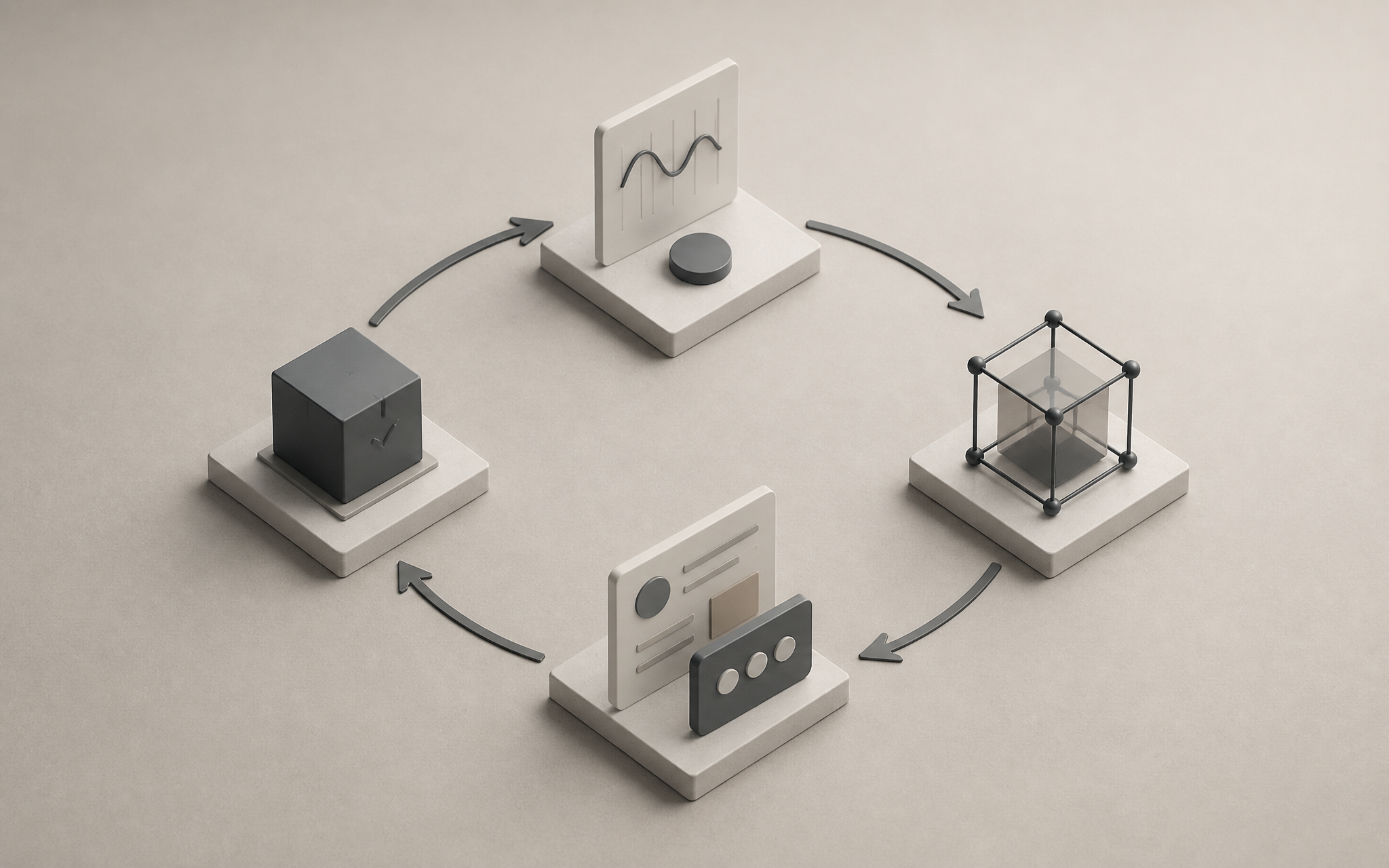
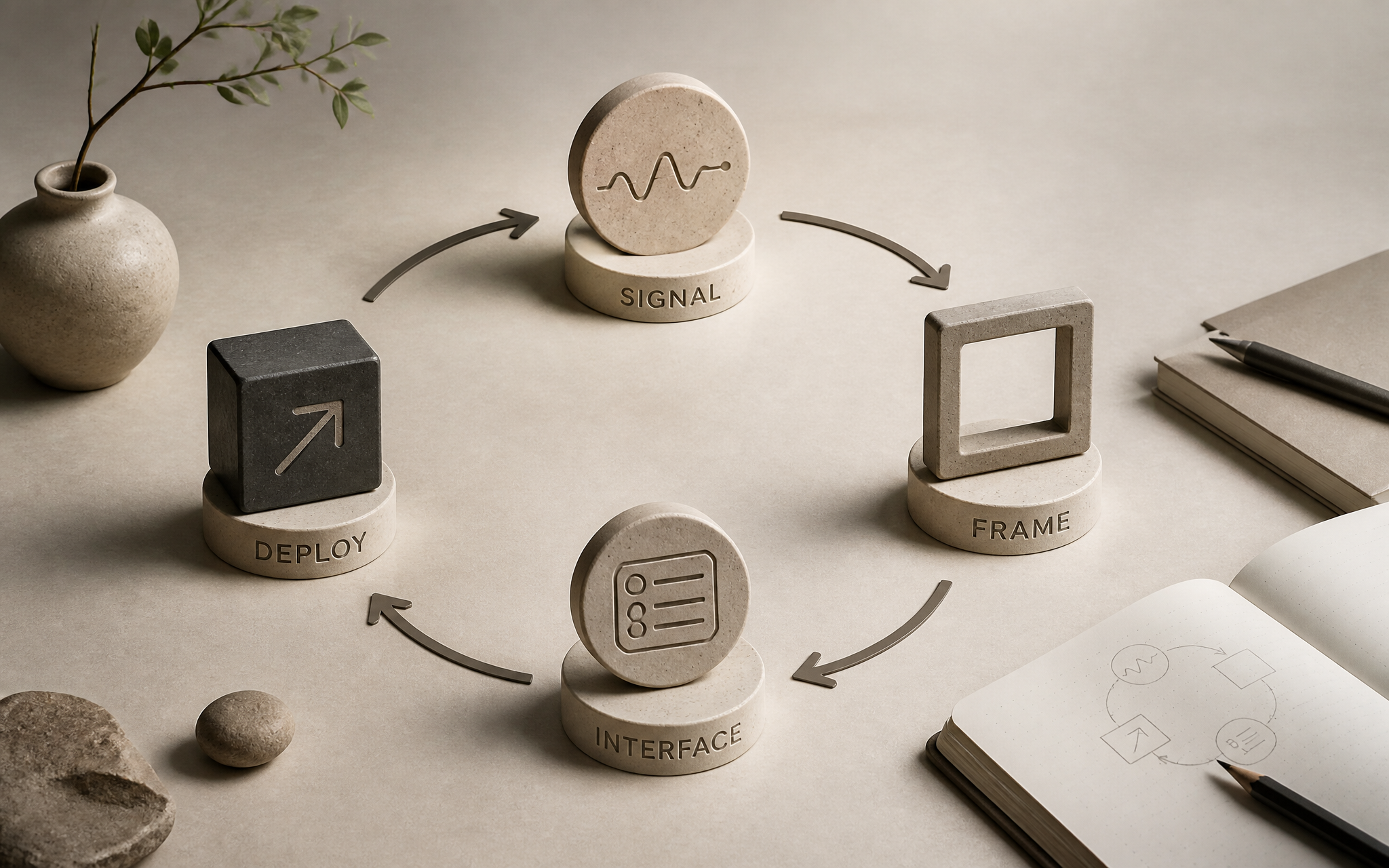
The studio works in loops: read the field, reduce the noise, ship the system, then sharpen what survives contact.
observe
compress
prototype.
publish
repeat

Operating Stack
For teams preparing a launch, funding round, product shift, or public repositioning.
We design the launch layer around a product.
01
Find where the story is unclear and what the market should remember.
02
Compress positioning into a clear structure your team can reuse.
03
Build pages, decks, and product surfaces with one visual logic.
04
Transfer motion rules, components, and launch material to your team.
Open Intake
The output is not a moodboard. It is a working kit for launch decisions.

04
operating loops
21
launch windows
06
week cycles
90
day adoption map
Field Archive
Visual fragments from launch systems, product surfaces, and studio research.



Systems
The work is organized as a repeatable loop: signal, frame, interface, deploy. Each loop leaves a usable artifact behind.
Study the LoopLoop Archive
Narrative Systems, Product Surfaces, Founder Material
Field Notes
01 / Signal
Reduce the story to what buyers, investors, and users can repeat.
02 / Interface
Index
03
Motion
04
Handoff
05
Adoption
Movement, handoff, and adoption are treated as one system.
04 / Handoff
Give teams reusable material, not fragile one-off compositions.
05 / Adoption
Design for the first ninety days after launch.
Operating Loop
A compact sequence for turning early product complexity into a public system.
We study the product, audience, category pressure, and the points where confusion slows momentum.
We create a narrative kernel, visual direction, and structural rules for every launch surface.
We assemble pages, decks, motion cues, components, and source files into one coherent kit.
We document the system so your team can reuse it without asking what belongs where.
Engage
Choose the depth of the operating system: a tight signal sprint or a full launch loop.
$4,800
/sprint
$6,000
Positioning map
Visual direction
Landing page concept
Launch checklist
$9,600
/cycle
$12,000
Identity system
Motion toolkit
Web direction
Team handoff
Brief
Ready to turn a scattered launch into a working system?
Begin Send BriefBrief notes. ×
We define the launch problem, collect existing material, and return with a focused scope that names the exact system we should build.
Most focused sprints run in two to four weeks. Full launch systems usually need six to nine weeks depending on content and approvals.
Yes. We build assets, rules, and examples so founders, marketers, and product teams can keep using the system after handoff.